
A Bright Blue, Secluded Glacier Lake You Can Hike to in Under an Hour
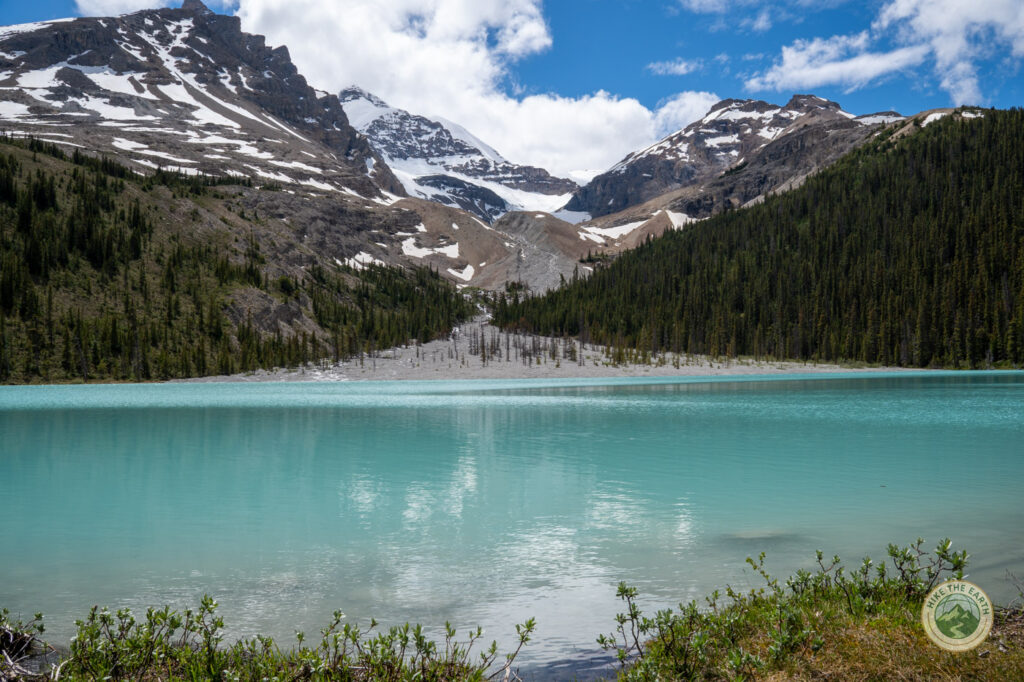
Tucked right at the Banff–Jasper National Park boundary, Boundary Lake is a peaceful, lesser-known spot that offers all the turquoise beauty of Lake Louise—without the crowds. It’s a short, quiet forest walk that leads to one of the most scenic alpine lakes I’ve visited. It might even be my favorite.
Trail Stats

Under 1 hour Roundtrip
2 km/1.2 miles
Minimal
Easy and Short

June to Early October
- Trailhead: Unsigned pullout at the Banff–Jasper National Park boundary sign, Icefields Parkway (Hwy 93N)
- Parking: Pullout at the trailhead, usually has open spots since there’s no trail signage
- Permit: Valid Banff or Jasper National Park pass required
- Crowds: Low
- Best for: Peaceful nature, photography, beginner hikers
Getting There
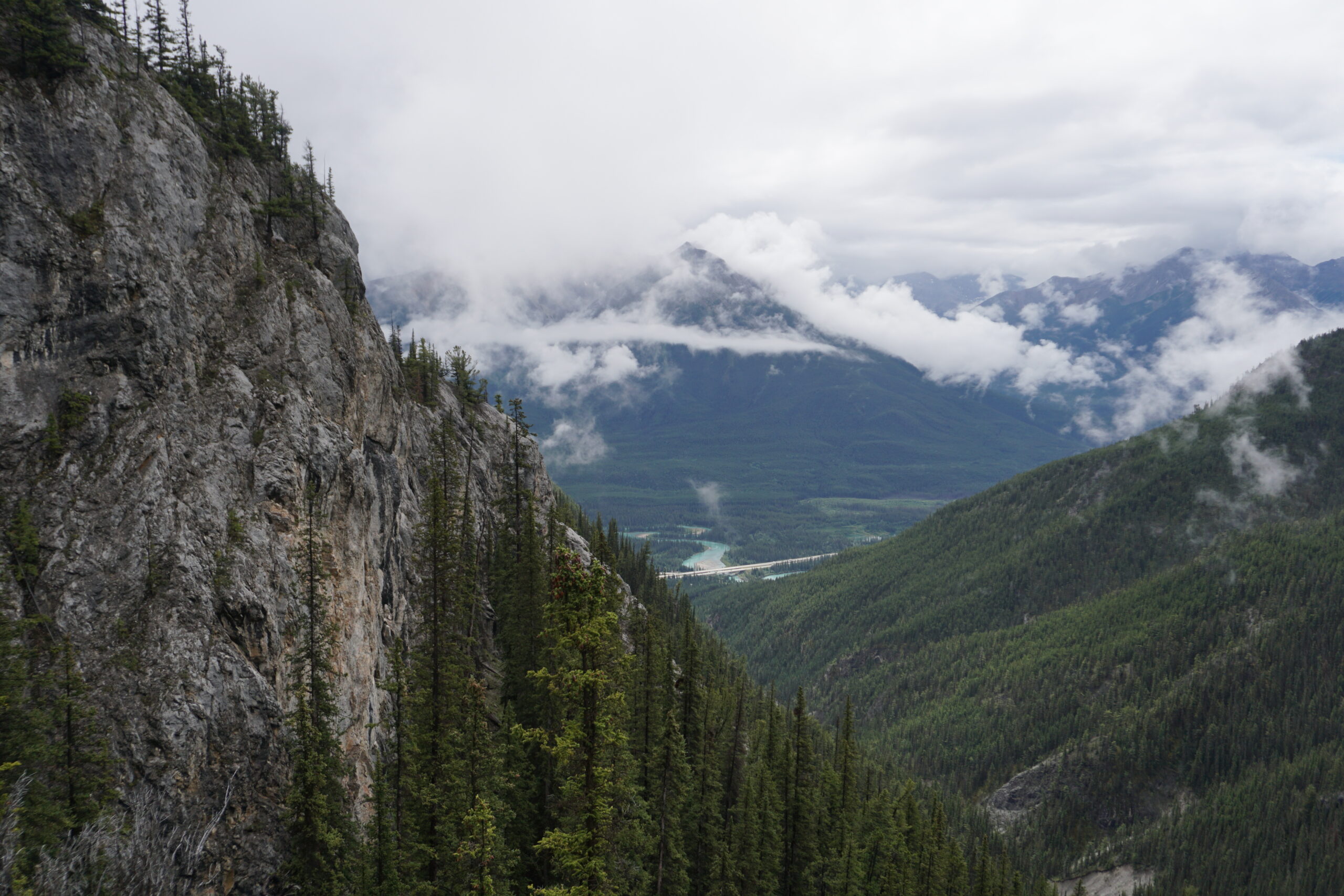
From Banff, it’s about 2 hours up the Icefields Parkway to Boundary Lake, and Parker Ridge is only a few minutes before it on the same side of the road, so it’s easy to do both in one day. On the way, about 15 to 20 minutes before you reach Boundary Lake, you’ll pass the Weeping Wall, a cliff with several waterfalls pouring straight down it. It’s an easy pullover and worth the two minutes.
The trailhead itself has no hiking sign at all. The only marker is the large green Parks Canada sign welcoming you into Jasper National Park, since the lake sits right on the line between the two parks. That’s actually part of what keeps it quiet. On this visit, the Parker Ridge lot down the road was completely full on a holiday weekend, while the Boundary Lake pullout still had plenty of open space, so it’s worth knowing as a backup.
The Unsigned Trail Through the Forest
Right from the parking lot, the trail starts immediately, no sign, no map board, nothing to tell you it’s there. You just walk down a small path into the trees.
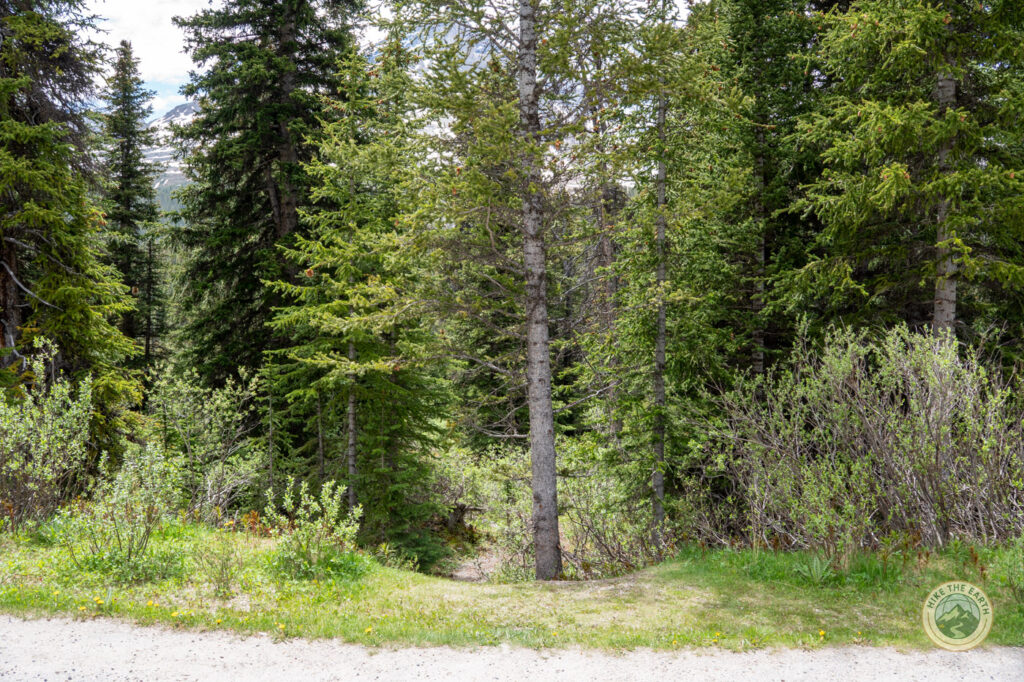
Within the first stretch, It opens up gradually into a meadow of low shrubs and the trail splits left and right. Go left. I still don’t know exactly where the right fork goes, but left is the way to the lake.
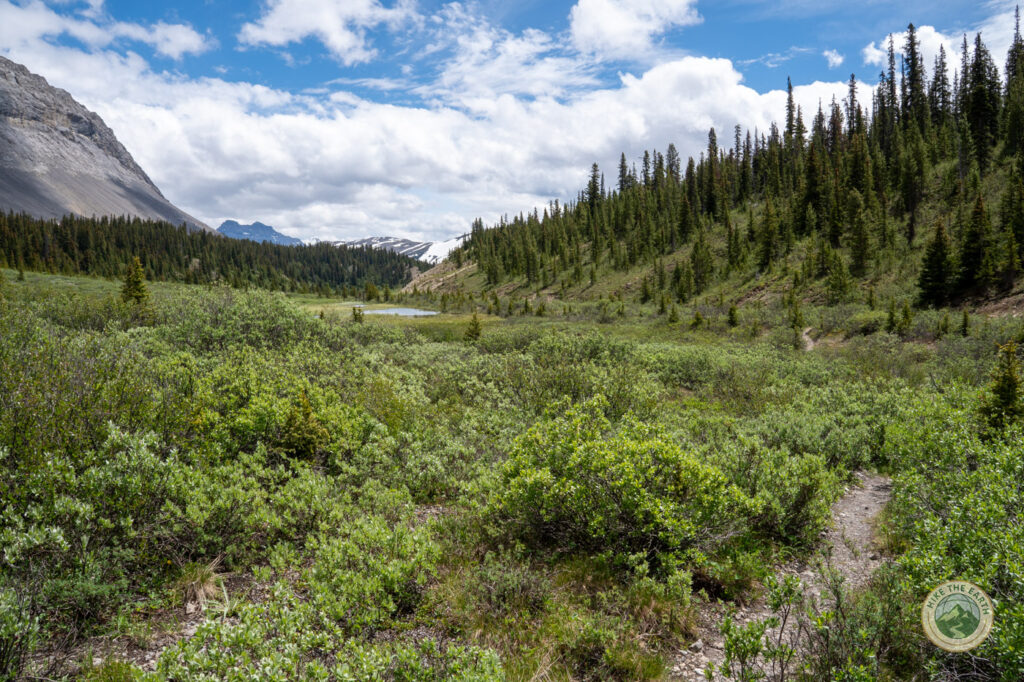
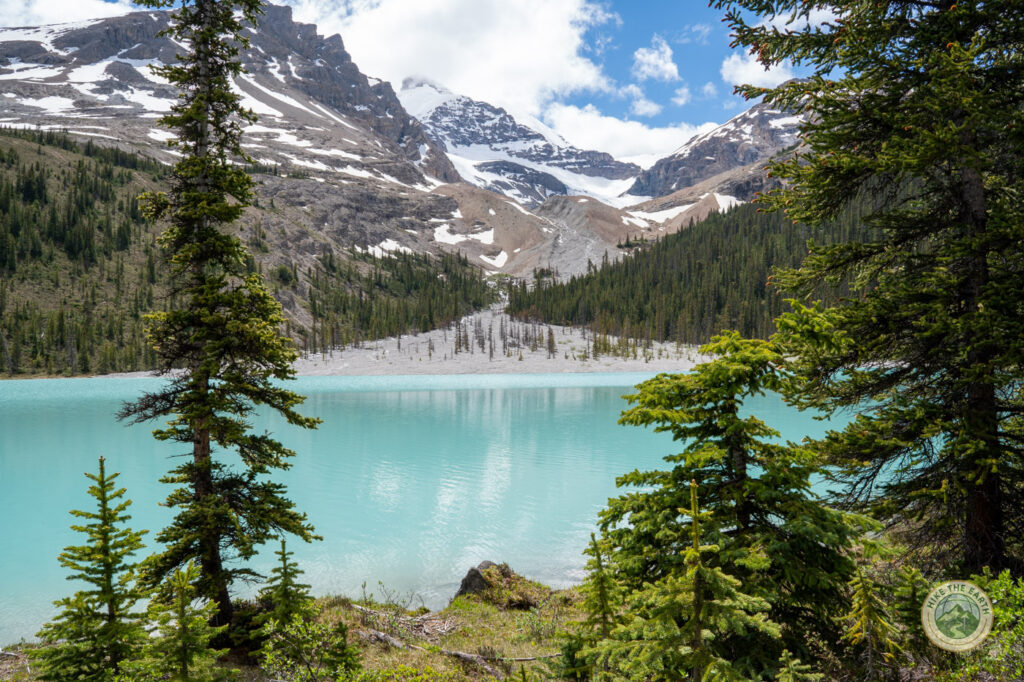
The forest walk is easy and shaded most of the way. Within half an hour, the lake comes into view through the trees.
The Lake Itself: Stunning Turquoise Blue
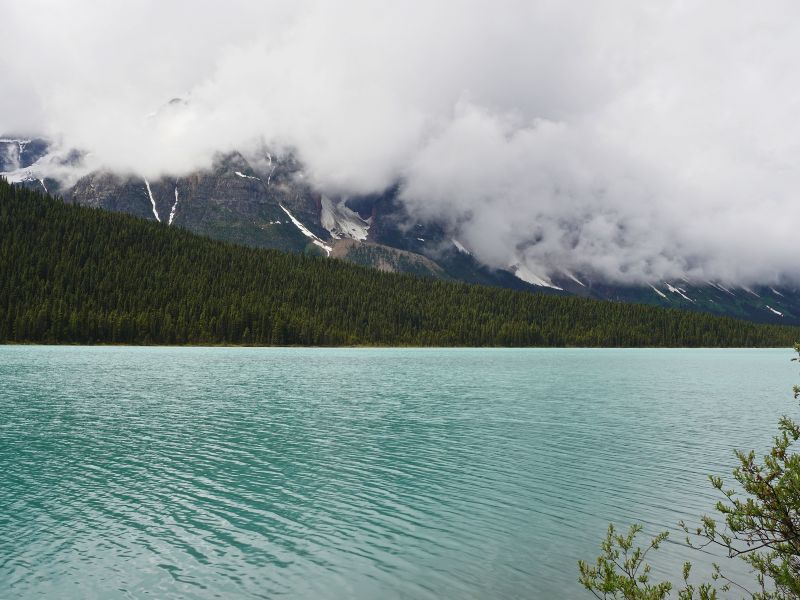
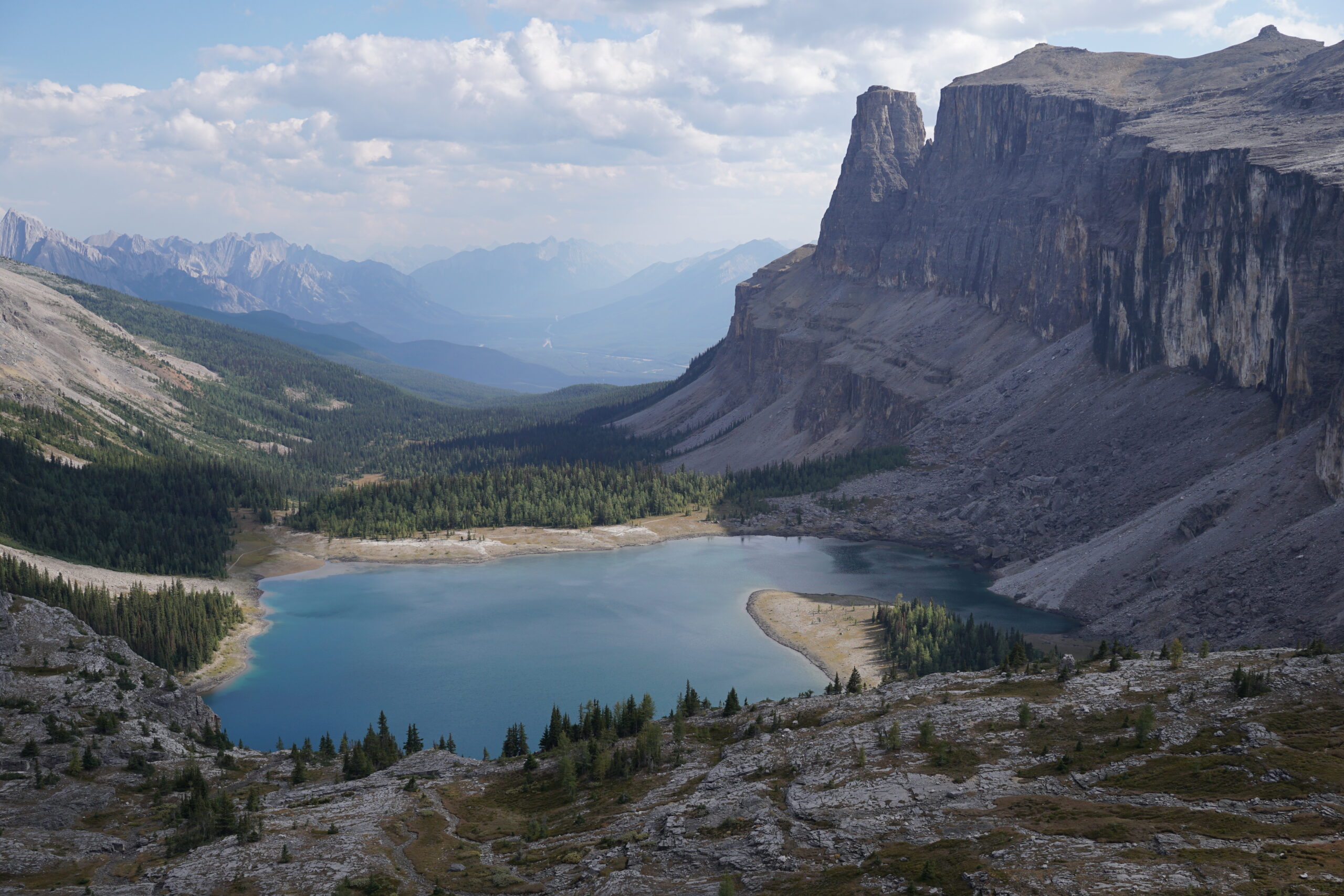
I want to address something directly here, because I saw a comment online claiming Boundary Lake has dried up and there’s hardly anything left. That’s not what I found on my June and July visits, when the lake was full, that same milky glacial turquoise, fed by runoff off the surrounding glaciers. I can’t speak to how it looks later in the season, but through early summer it’s very much alive.
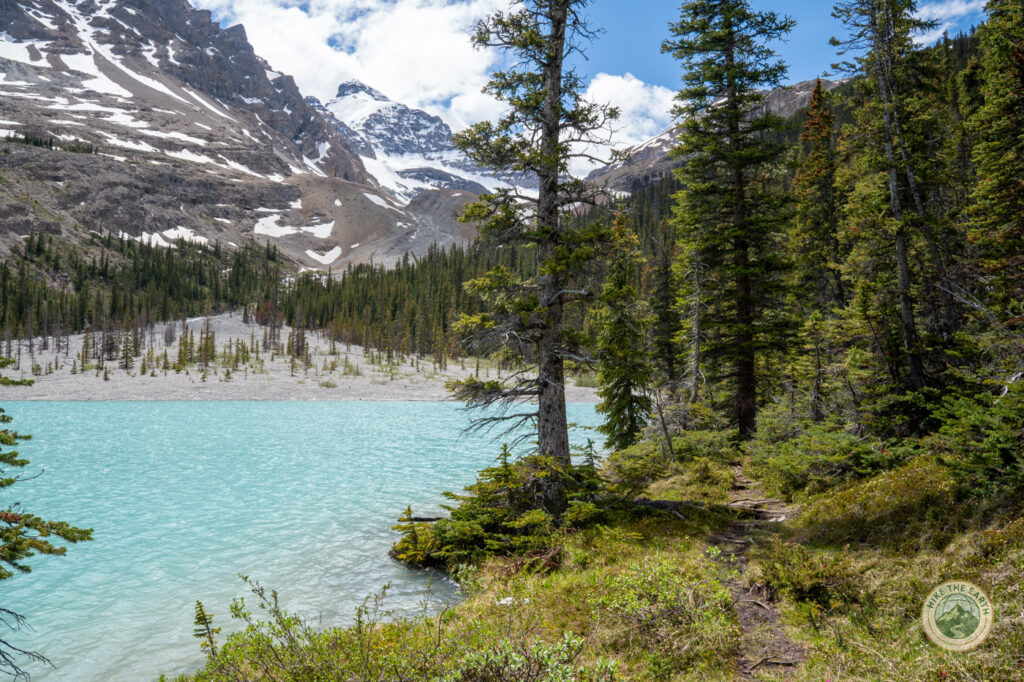
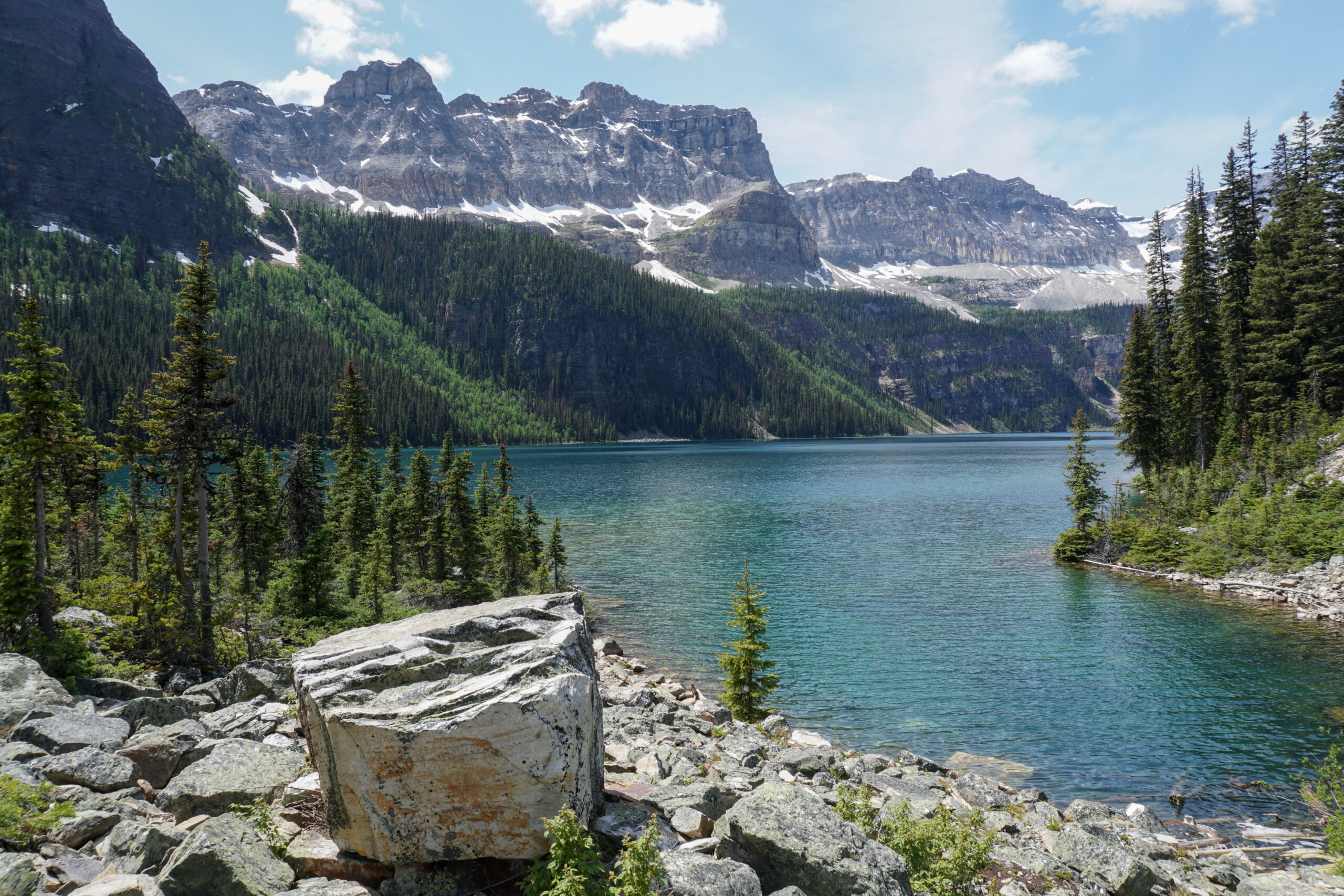
Water levels do change through the season, though, and that’s the real update. When I hiked this in June, water levels were high enough that we couldn’t get past the near shore. This time, hiking on July 1st, the water had receded enough that we could walk the shoreline trail all the way around to the back of the lake, something we’d never been able to do before.
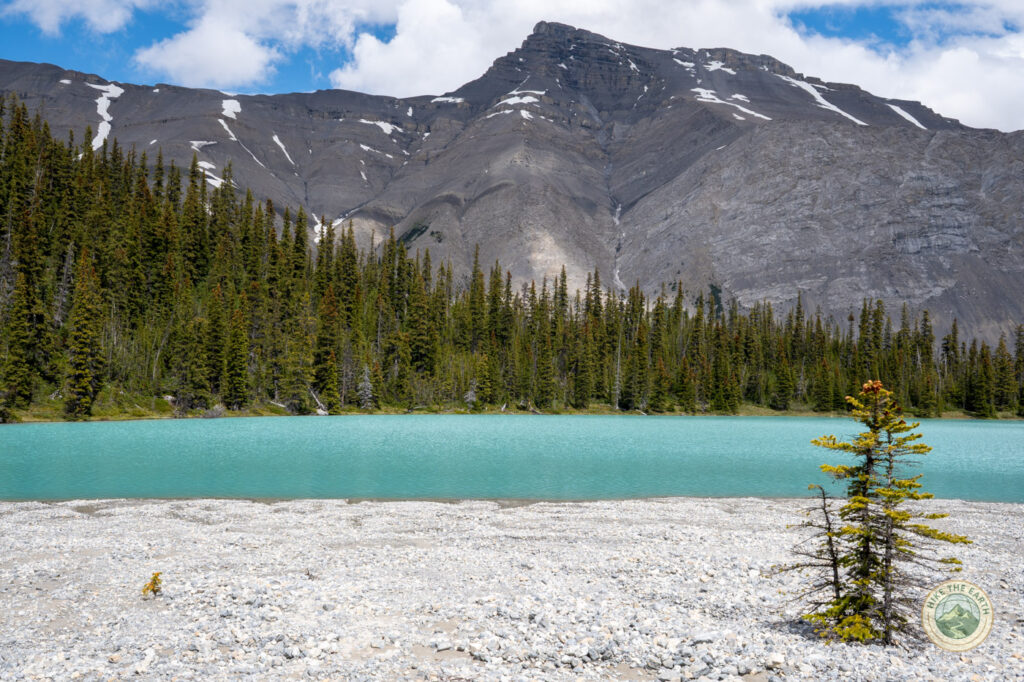
From the back of the lake, you get a completely different angle, with the glacier-carved valley and mountain range framed dead center above the water.
If you’re planning around this, June tends to run high water and a shorter shoreline walk, while by Canada Day the lake has usually dropped enough to circle it. Either way, it’s still a short out-and-back, so it’s a great option if you’re already driving the Parkway and have a bit of extra time to spend.
If you enjoyed this hike, you might also love Glacier Lake — another easy, low-crowd lake hike on the Icefields Parkway that also makes a great backcountry campsite if you want to turn it into an overnight.
Make It a Full Day on the Parkway
Boundary Lake pairs naturally with a few other stops if you’re spending the day on this stretch of road.
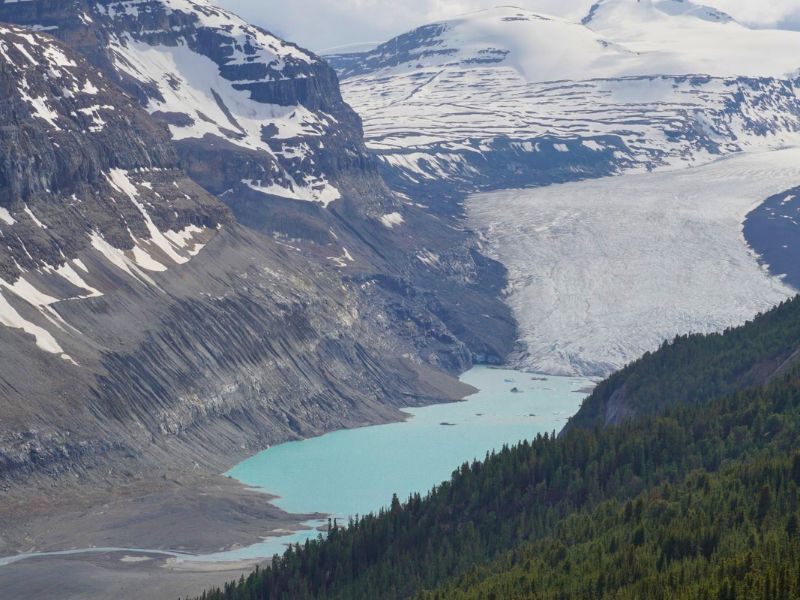
Parker Ridge, just a couple of minutes north, is a moderate 5 km round trip that takes 2 to 2.5 hours and rewards you with panoramic views of the Saskatchewan Glacier. There’s a quieter side viewpoint to the right of the main trail that opens up into a full mountain panorama, and it’s worth the extra few minutes if the main viewpoint is busy.
On the drive itself, easy pullover stops include the Crowfoot Glacier Viewpoint, Bow Lake, Waterfowl Lakes, and the Weeping Wall. Peyto Lake is normally packed, but if you catch it during a rainy spell like we did once, you might get the whole viewpoint to yourself.
Tips for Hiking Boundary Lake
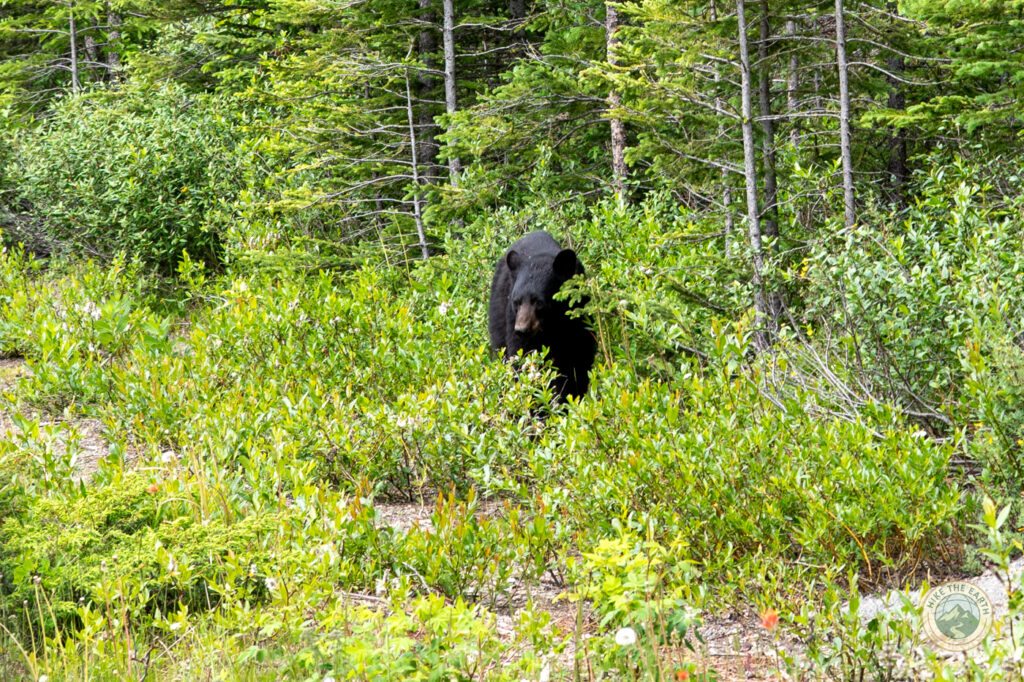
While driving on the icefields parkway to get to Boundary Lake, keep an eye out for wildlife! Almost every time we drive on this road, we see a black bear!
Remember to bring bear spray for the trail as well!
If you’re hiking in June, expect higher water and don’t count on reaching the far shore. This is fine though as the main shore offers the best view.
Pack water and snacks, since there’s nothing at the trailhead itself, and you’re likely a couple hours drive away from the next town site.
Final Thoughts
Boundary Lake is one of those places you stumble on and instantly want to keep secret. It’s a quick stop with a big payoff—glacial blue color and serene solitude. If you’re craving something peaceful and under-the-radar, this lake is a must.
Frequently Asked Questions
Is Boundary Lake trail worth hiking?
Yes, it’s one of the easiest ways to see genuinely turquoise glacier water without any crowds. At roughly 2 km round trip and under an hour, it’s a low-effort stop that pays off with a picture perfect view of a pristine glacial lake.
How long is the Boundary Lake hike?
It’s about 2 km (1.2 miles) round trip and takes most hikers around 45 minutes.
Has Boundary Lake dried up?
Not based on June and July 2026 visits, when the lake was full and its usual turquoise color. Water levels do drop through the season, and it’s possible things look different by the time it’s September, but as of July 2026 the lake is clearly not dried up.
Do I need a park pass to hike Boundary Lake?
Yes, a valid Banff or Jasper National Park day pass or annual Discovery Pass is required, since the trailhead sits right on the boundary between the two parks.
Is there a chance of seeing bears on the Icefields Parkway?
It’s genuinely one of the better wildlife-viewing drives in the Rockies, and black bear sightings along the road are common, though never guaranteed. Bring bear spray for the trail regardless of whether you see one.
I’ll be sharing this with my team.